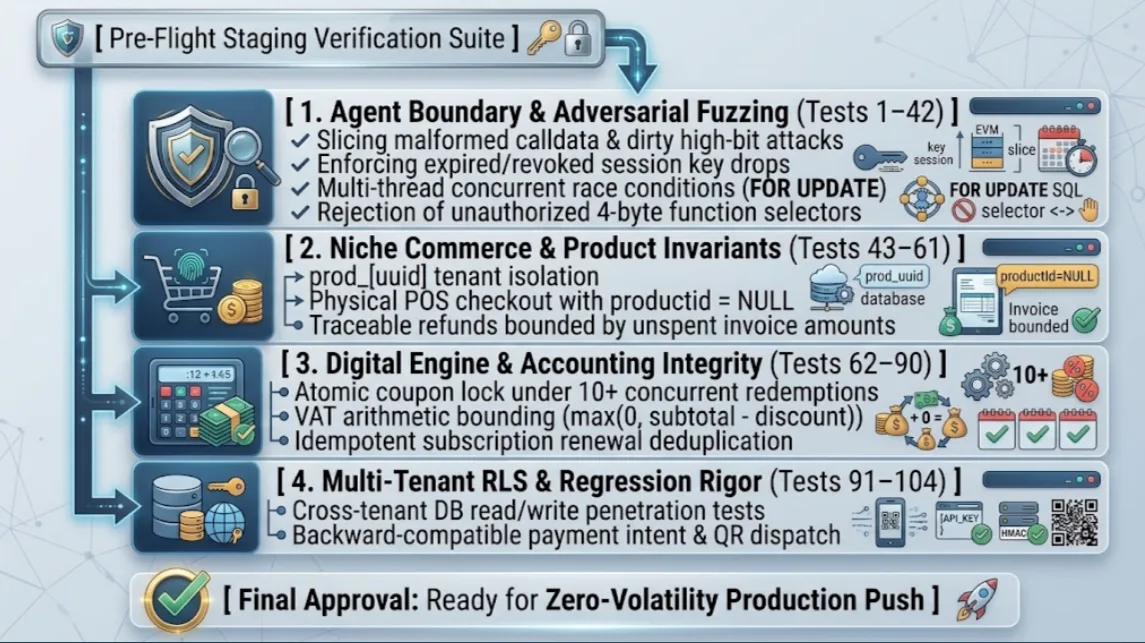
Day 10: Pre-Flight Staging & The 100+ Adversarial Test Matrix
Why we don't open testnets prematurely: The rigorous 104-test verification pipeline governing non-custodial agentic rails and niche commerce boundaries before public sandboxes.
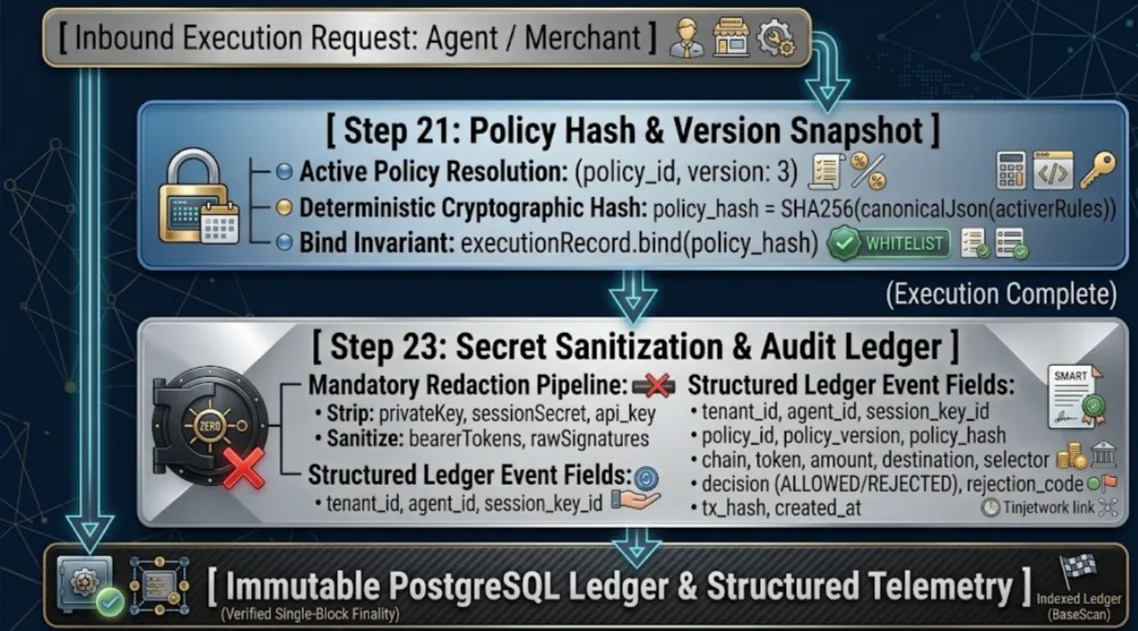
Day 9: Deterministic Auditability & Telemetry — Structuring Logs Without Leaking Secrets
Immutable observability for machine commerce: Why historical state reproduction requires policy hash versioning, and how strict sanitization filters prevent secret leakage.
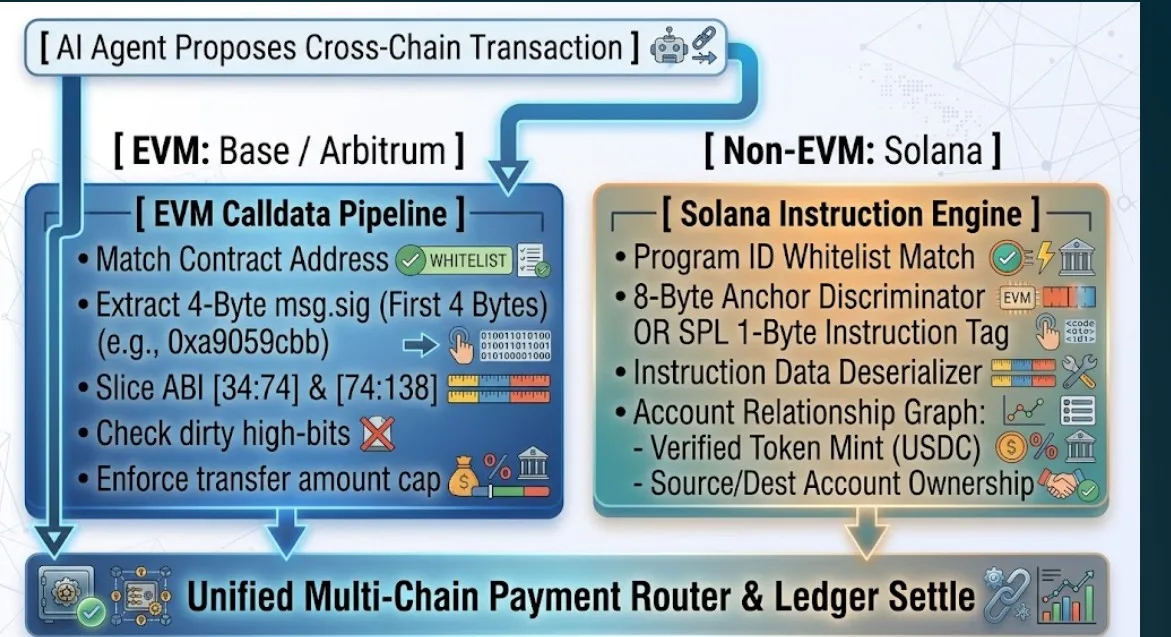
Day 8: Cross-Chain & Non-EVM Execution Bounds — Solana Instruction Policy vs. EVM Selectors
Escaping EVM assumptions: Why 4-byte calldata slicing fails on Solana, and how program IDs, 8-byte Anchor discriminators, and account relationship validations secure non-EVM autonomous execution.
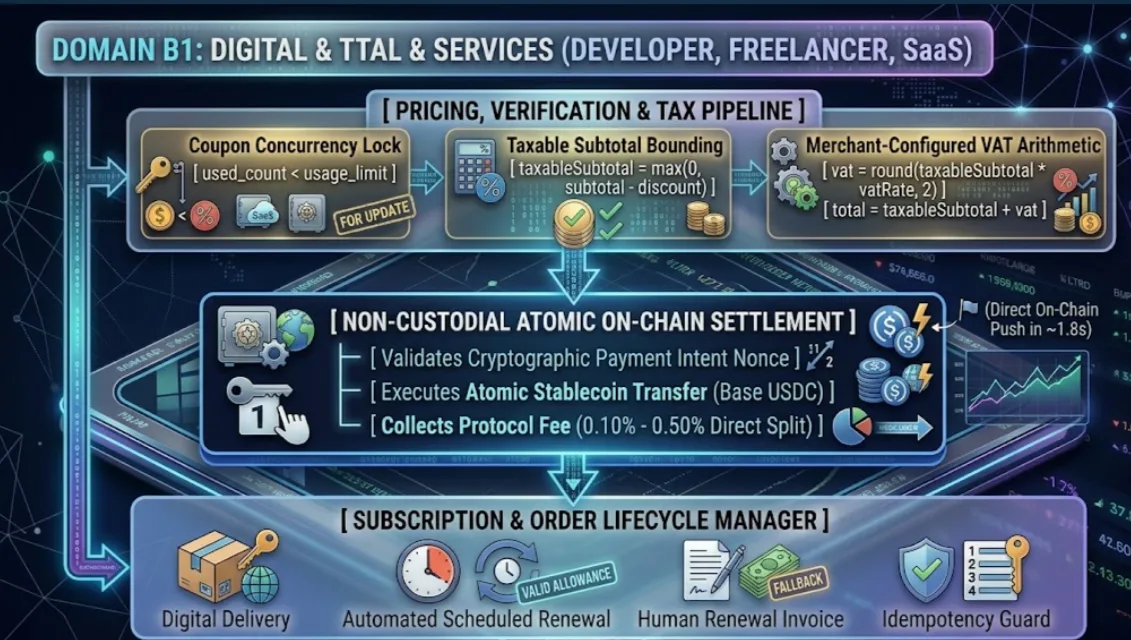
Day 7: The Digital Commerce Engine — Coupons, Dynamic VAT Math & Idempotent Subscriptions
Beyond basic payment links: How atomic coupon locks, merchant-configurable VAT arithmetic, and idempotent renewal states power production-grade Web3 commerce.
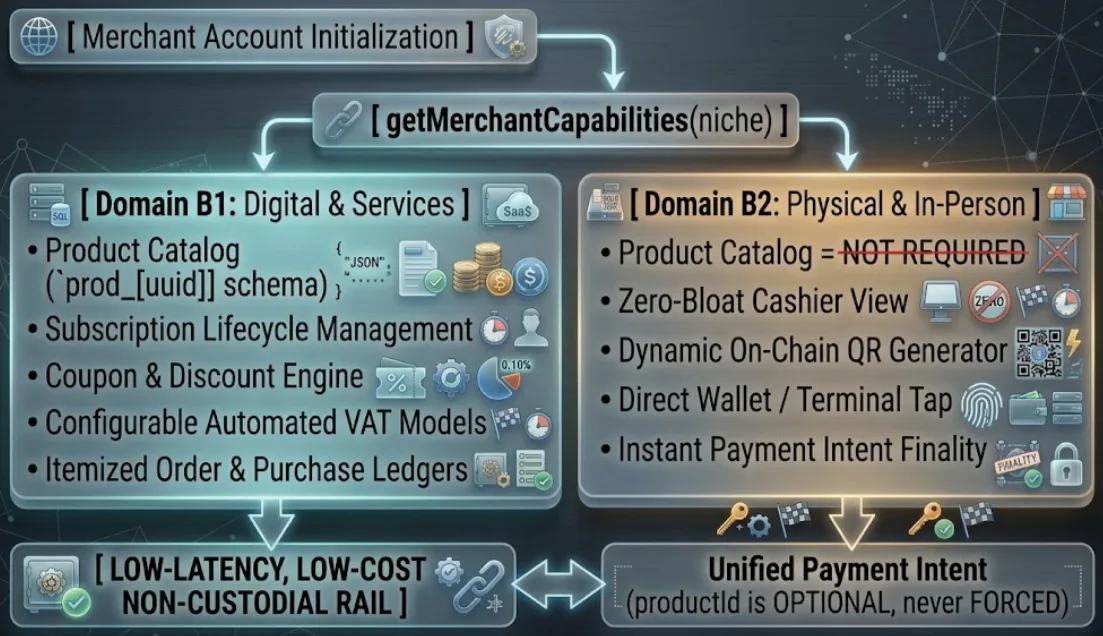
Day 6: Niche-Aware Capability Architecture — Separating Digital Catalogs from Retail POS
Eliminating UI and schema bloat: Why one-size-fits-all checkout software fails across diverse merchant types, and how capability-driven design isolates complex catalog workflows from lightweight terminal checkouts.
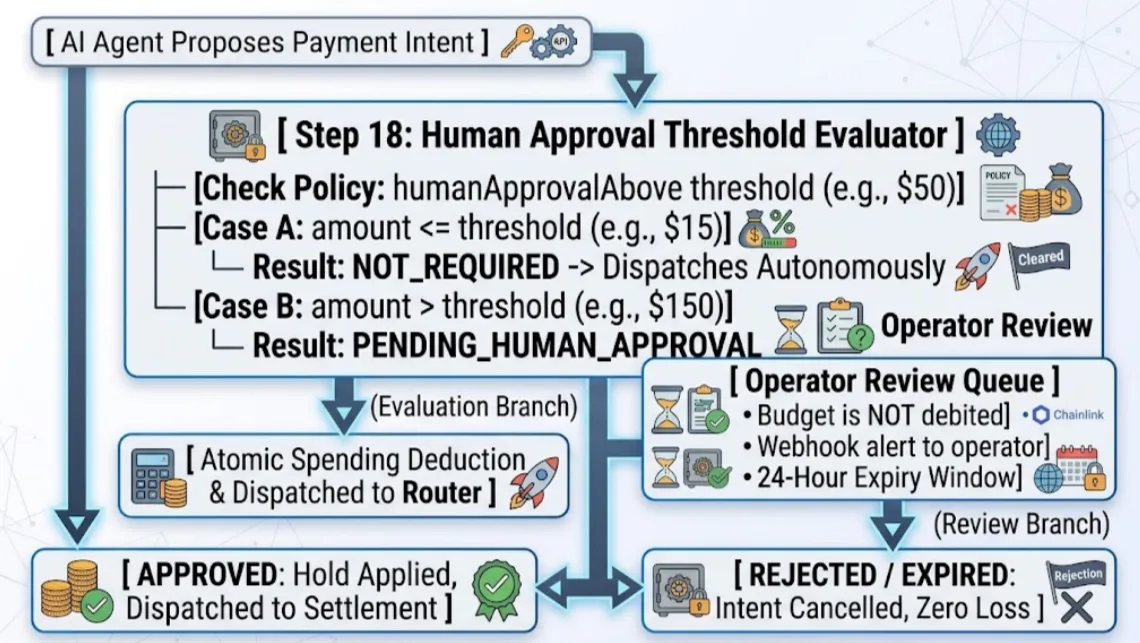
Day 5: Human-in-the-Loop Thresholds — Escalation Paths for Out-of-Bound Machine Spends
Bridging autonomy and oversight: Why high-value operations require asynchronous human authorization, and how deterministic state machines prevent budget starvation during review.
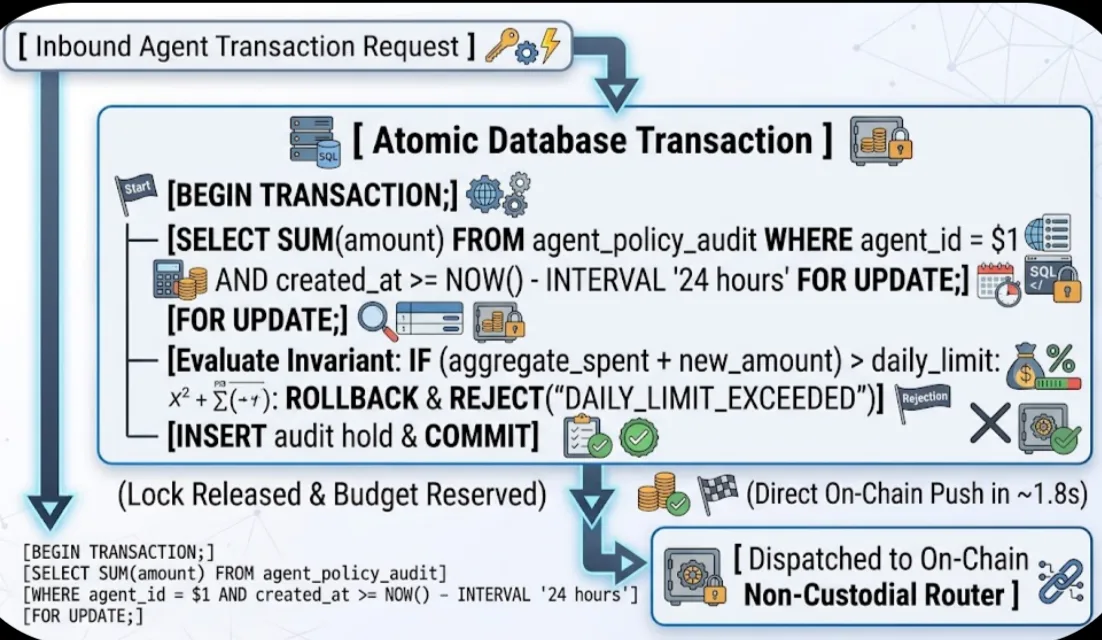
Day 4: Concurrency-Safe Velocity Envelopes — Preventing Double-Spend & Spend Races
Eliminating the read-compute-write race condition: Why naive spending limits fail under parallel agent execution, and how row-level locking preserves deterministic financial boundaries.
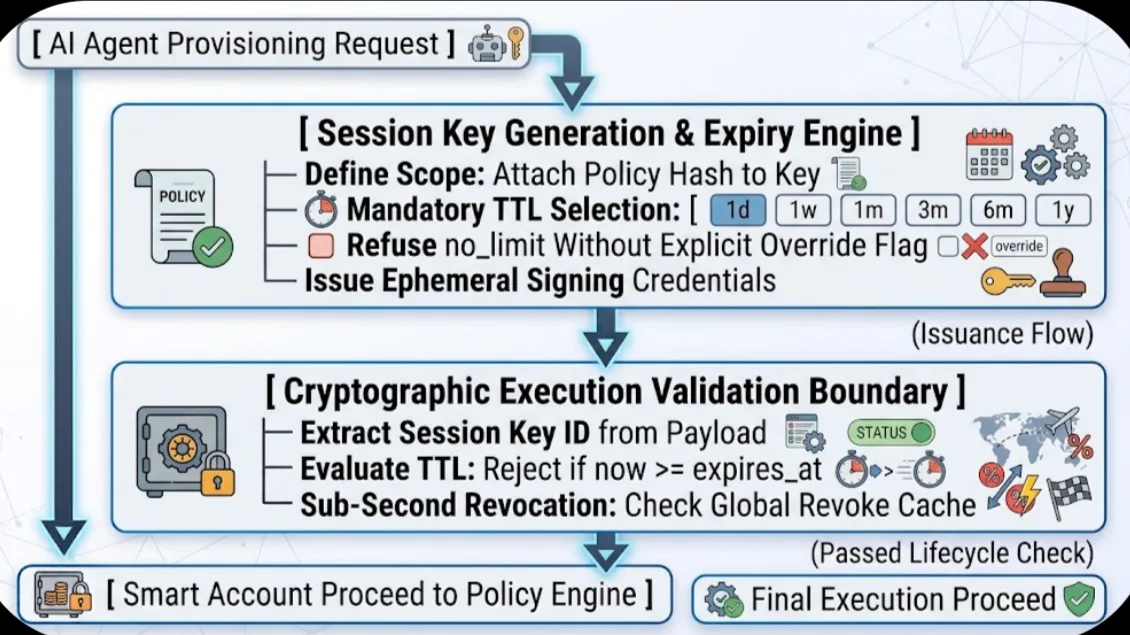
Day 3: Session Key Lifecycle & Ephemeral TTLs — Eliminating Stale Agent Authorization
Preventing the "forgotten wallet" exploit: Why infinite-duration API keys fail in machine commerce, and how mandatory Time-To-Live (TTL) expiries secure autonomous agent fleets.
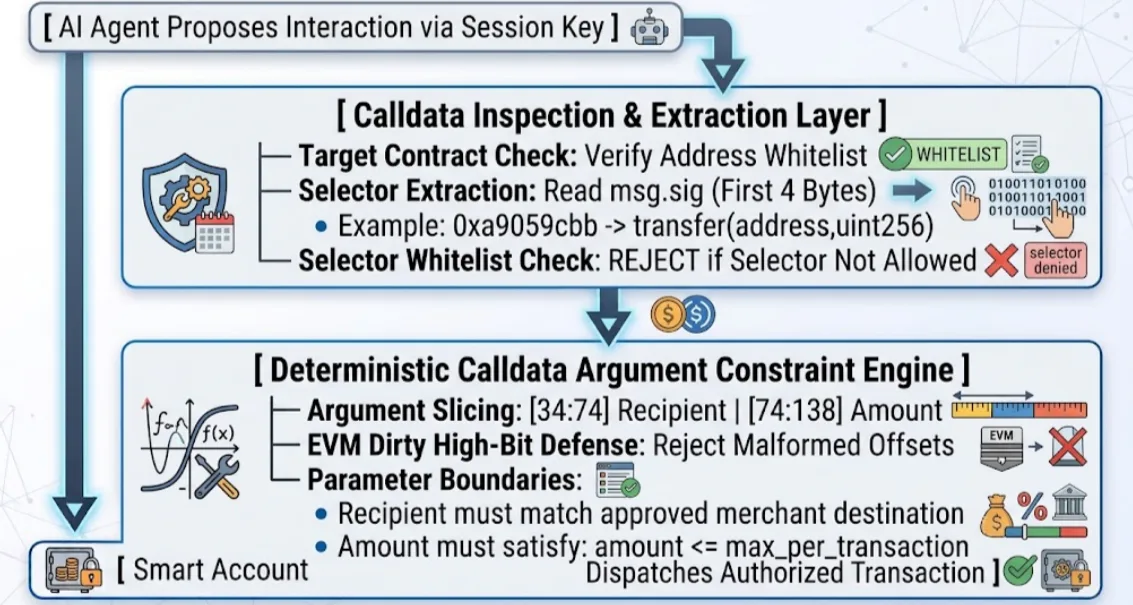
Day 2: Beyond Address Whitelists — Enforcing 4-Byte Function Selectors & Calldata Constraints
The illusion of address-only security: Why pre-approved target addresses leave smart accounts vulnerable, and how granular EVM selector parsing and calldata bounds prevent unauthorized contract interactions.
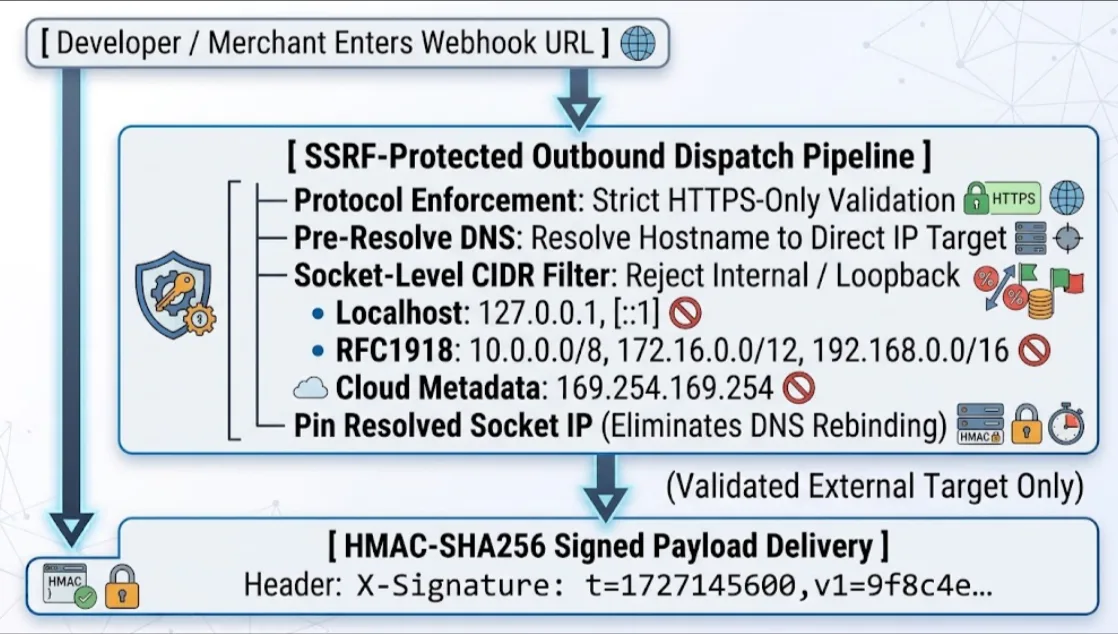
Day 1: Hardening Webhook Infrastructure — Real-Time SSRF Defense & DNS Rebinding Mitigation
Securing the outbound event pipeline: Why accepting user-supplied webhook endpoints threatens internal microservices, and how strict socket-level IP pinning mitigates SSRF vulnerabilities.
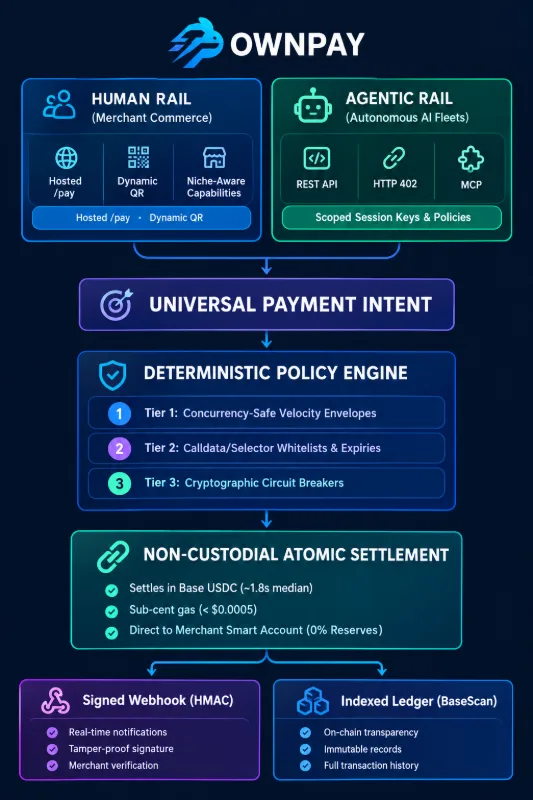
Day 10: Introducing OwnPay — The Sovereign Payment Rails for Human Commerce & Autonomous AI Agents
The 10-day architectural synthesis: Announcing the Base-native, non-custodial payment protocol featuring universal payment intents, 3-tier deterministic agent guardrails, and niche-aware merchant checkouts.
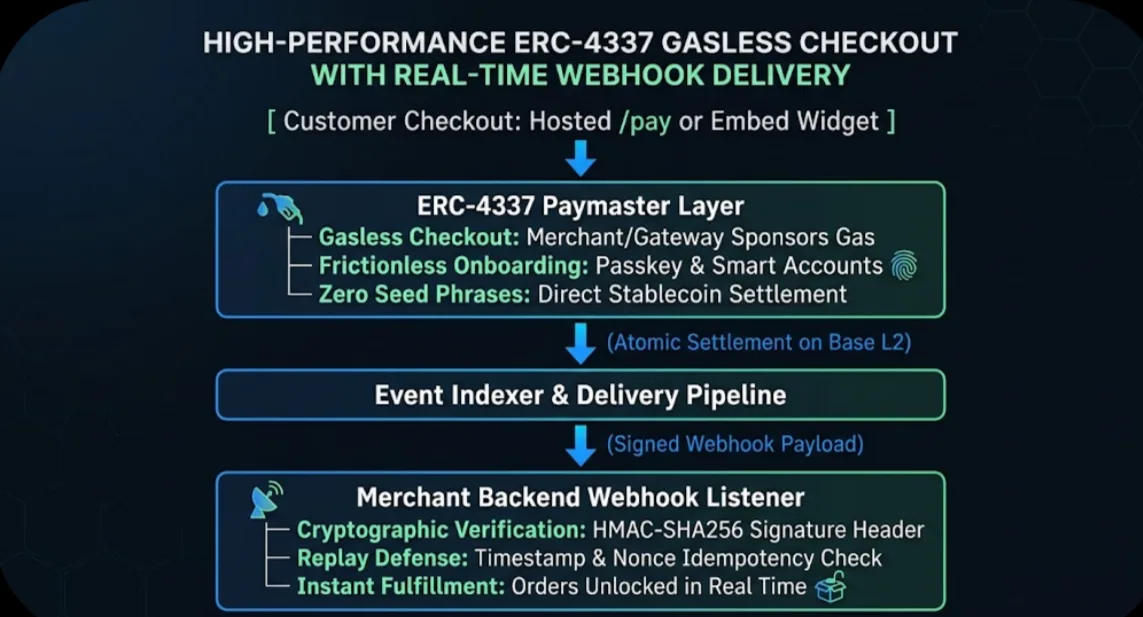
Day 8: 3-Tier Policy Guardrails — Preventing Rogue Spending in Autonomous Agent Fleets
Containing the autonomous balance sheet: How velocity budget envelopes, destination whitelisting, and cryptographic circuit breakers protect enterprise treasuries from model drift and recursive tool calls.
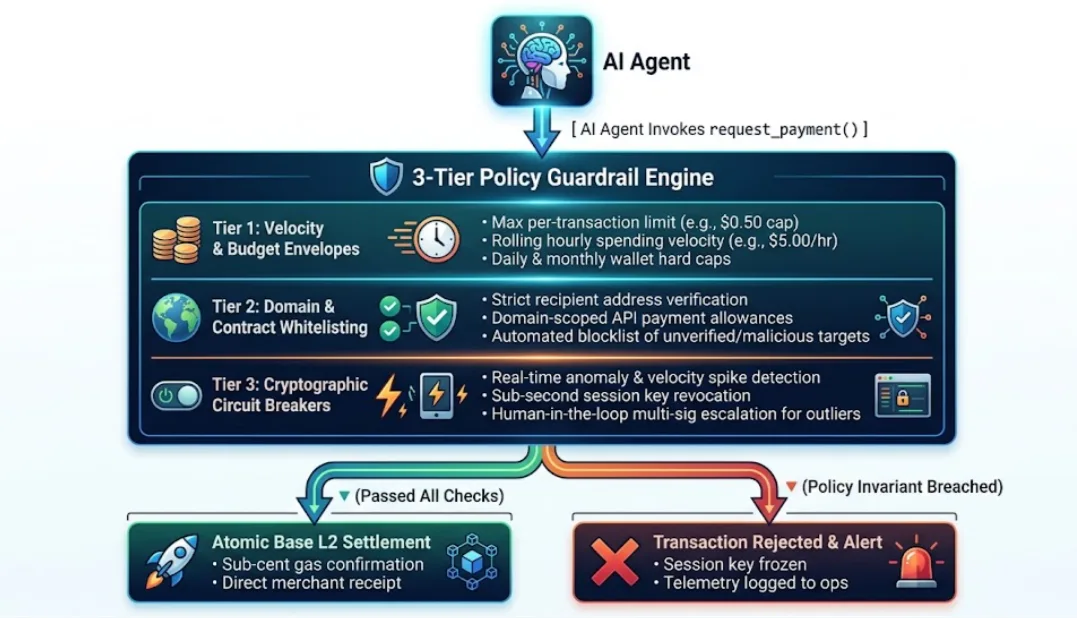
Day 8: 3-Tier Policy Guardrails — Preventing Rogue Spending in Autonomous Agent Fleets
Containing the autonomous balance sheet: How velocity budget envelopes, destination whitelisting, and cryptographic circuit breakers protect enterprise treasuries from model drift and recursive tool calls.
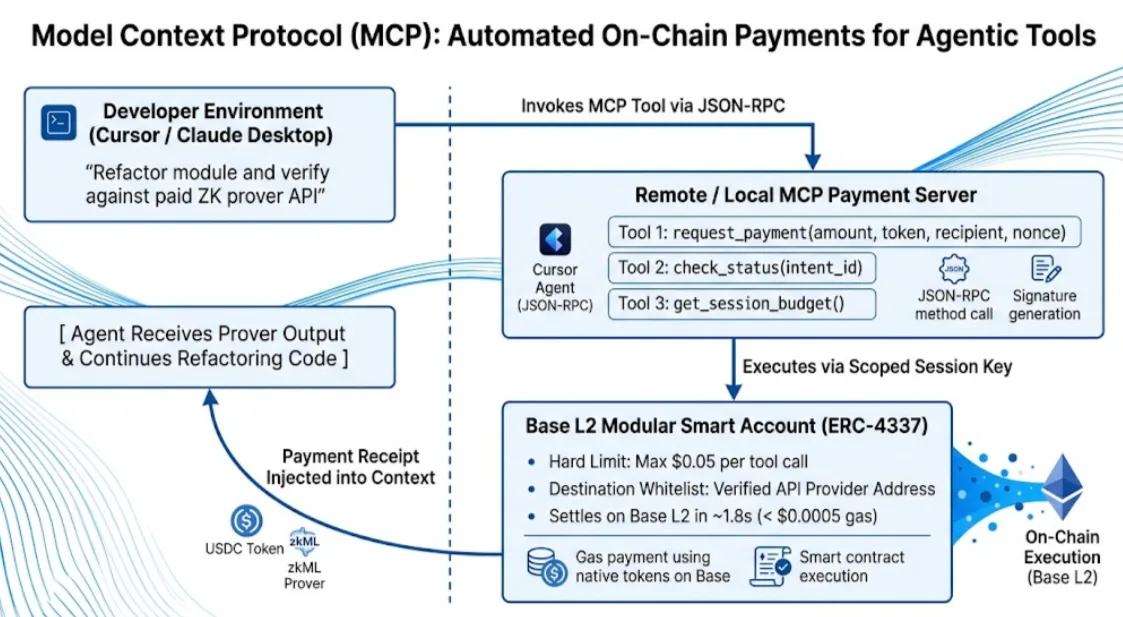
Day 7: Agentic Tooling & MCP Rails — Equipping AI IDEs and Frameworks with Programmatic Wallets
Beyond chat prompts: How open Model Context Protocol (MCP) server architecture, standardized payment tools, and scoped session keys transform Cursor, Claude Desktop, and LangChain into autonomous economic actors.
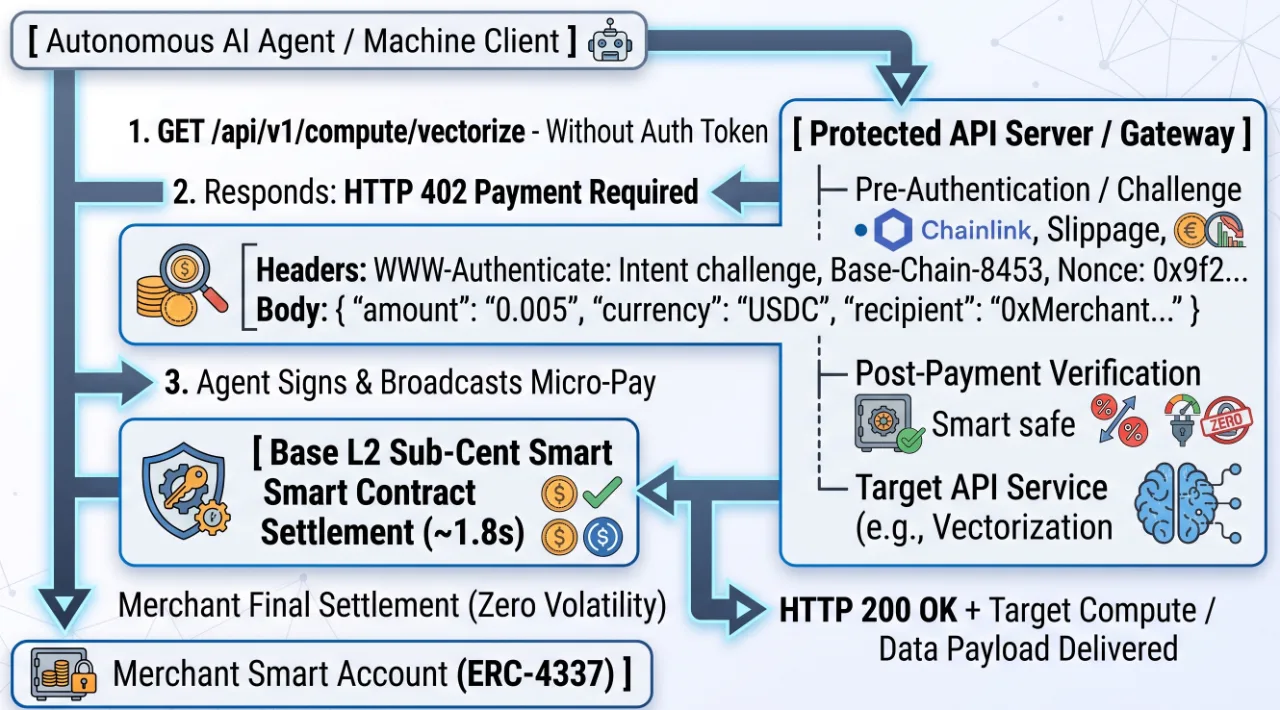
Day 6: Machine Commerce & The Native Web — Implementing HTTP 402 Payment Required
Reviving the web’s reserved economic status code: How RFC HTTP 402 header negotiation, machine-readable intent challenges, and sub-cent programmatic settlement enable true pay-per-request API economies.
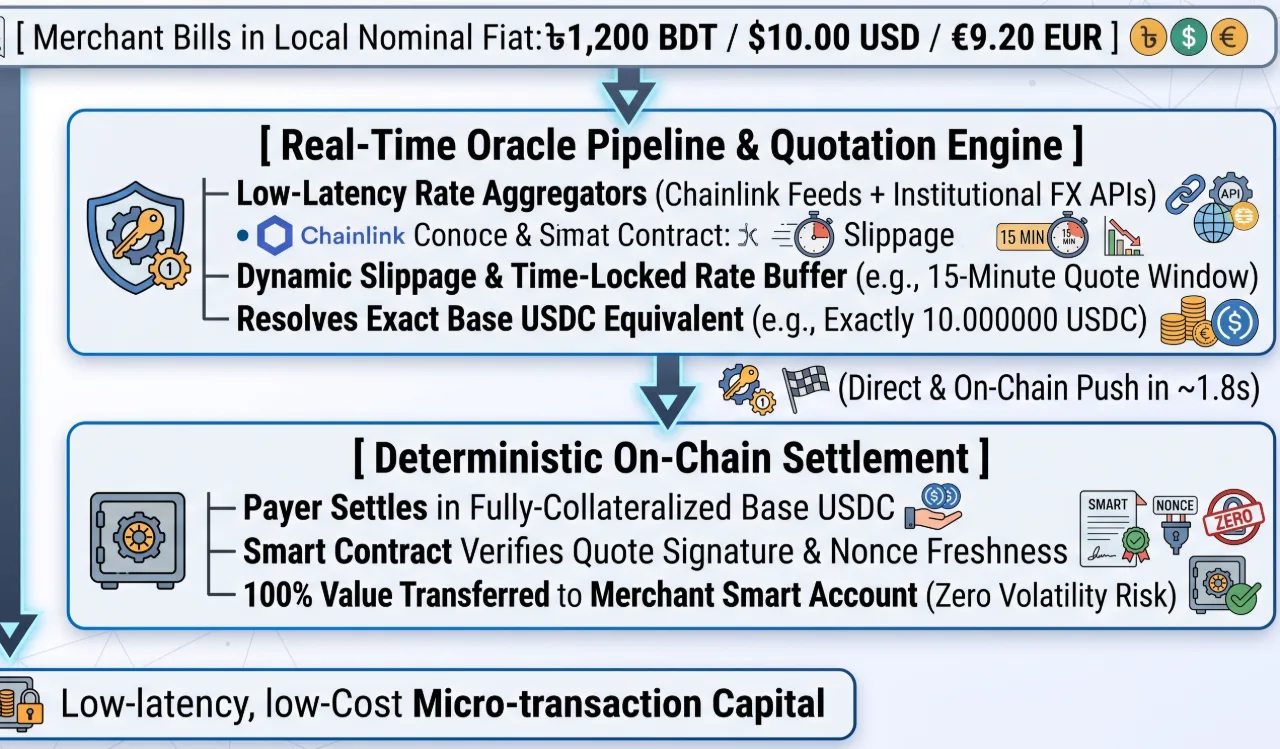
Day 5: Multi-Currency Nominal Pricing with Zero Volatility — Real-Time Pegged Stablecoin Conversion
Eliminating the crypto price barrier: How dynamic oracle feeds, multi-currency nominal quotes (USD, EUR, BDT, INR), and 1:1 pegged Base USDC settlement shield merchants from asset volatility.
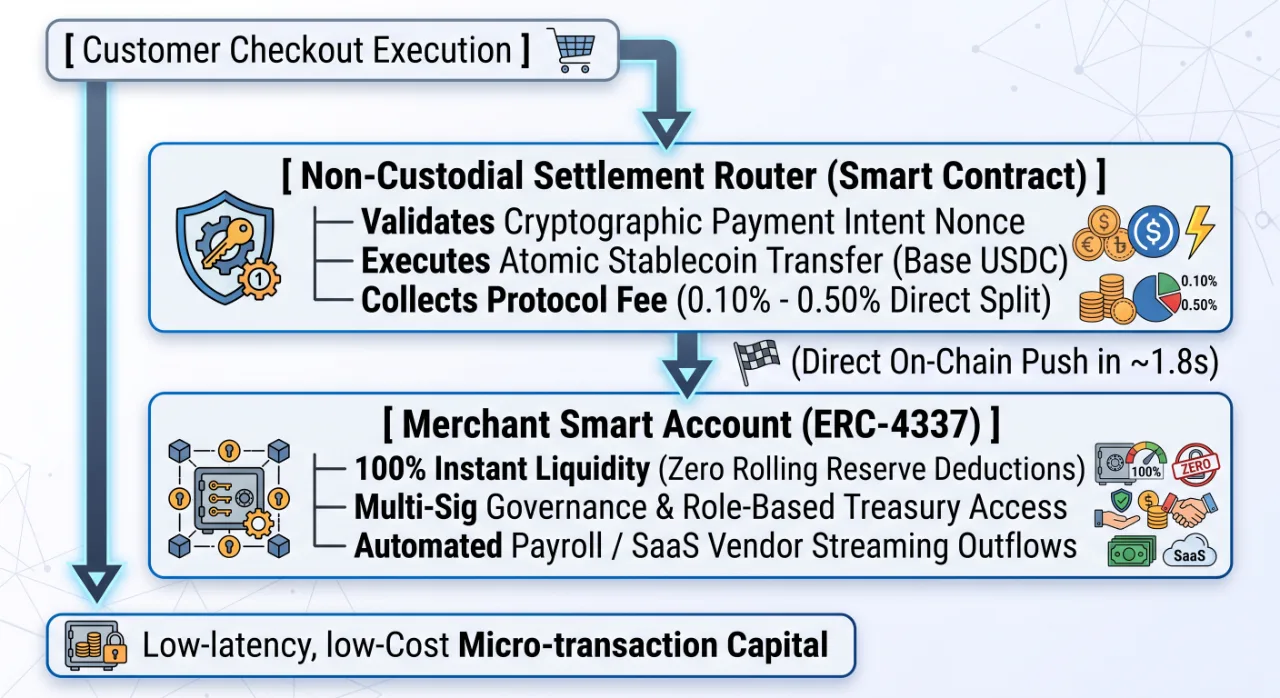
Day 4: Zero-Reserve Non-Custodial Architecture — Direct Smart Account Liquidity
Dismantling custodial drag: How autonomous on-chain routing, smart accounts, and direct-to-wallet settlement eliminate the need for rolling reserve holdbacks.
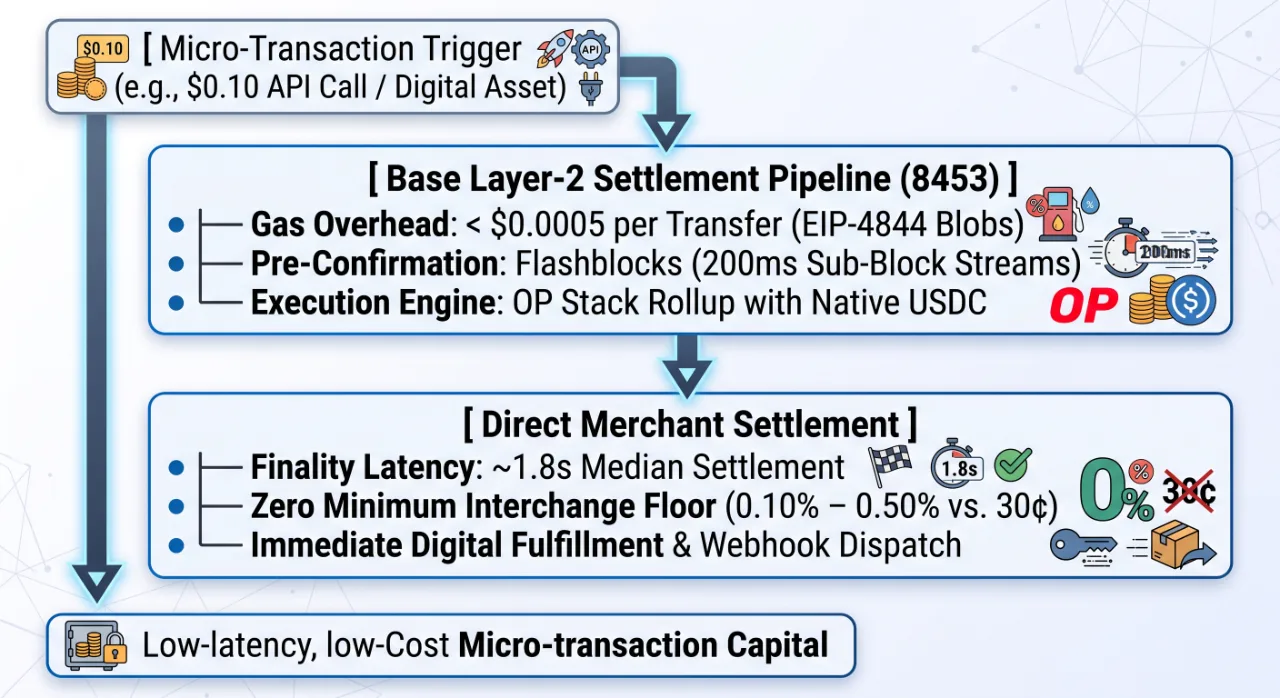
Day 3: Sub-Cent Micro-Settlement on Base L2 — Making Sub-Dollar Transactions Economically Viable
Deconstructing the economics of on-chain scale: How Layer-2 data blobs, sub-cent execution fees, and 200ms Flashblock pre-confirmations eliminate the flat-fee barrier for digital micro-commerce.
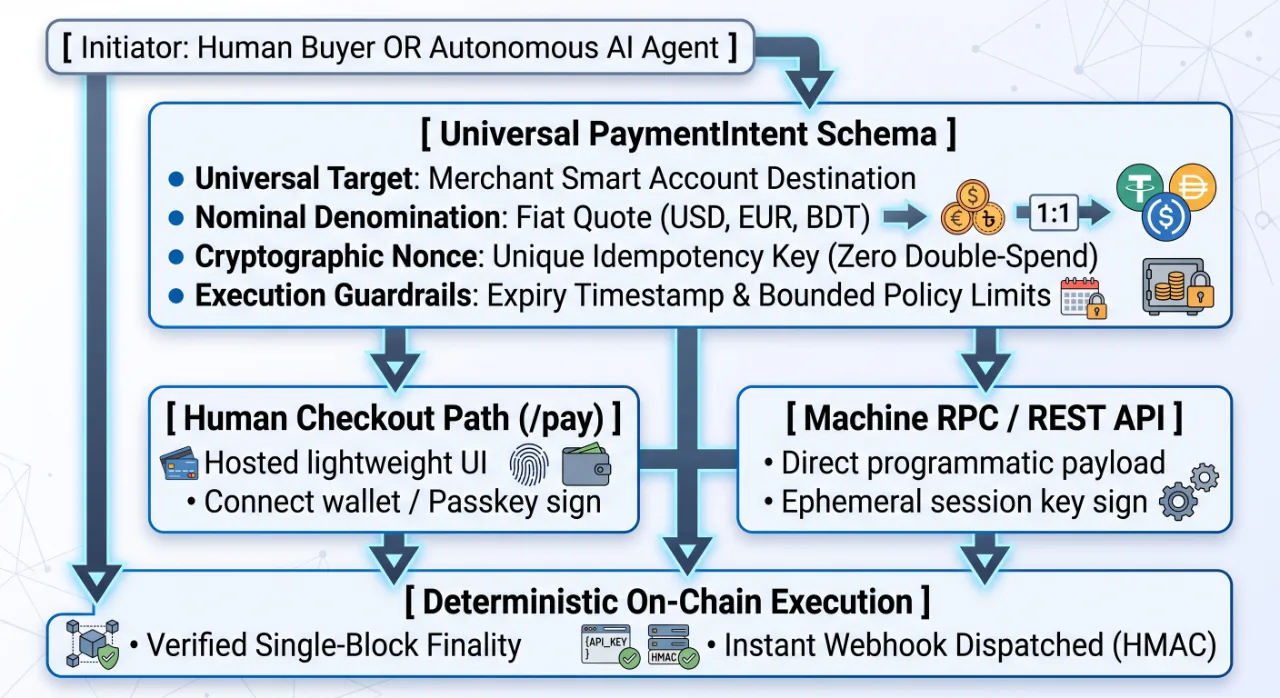
Day 2: The Universal Payment Intent — Decoupling Payment Declaration from On-Chain Execution
Architectural abstraction for modern commerce: How standardizing payment declarations across human checkout links and machine API calls enables deterministic, multi-currency on-chain settlement.

Day 1: The 3% Intermediary Tax & Custodial Hostage — Why Legacy Gateways Break Modern Digital Commerce
Deconstructing the hidden friction of traditional card networks: How interchange fees, rolling reserves, and multi-day settlement drag down global builders and indie developers.
Day 10: The 2027 Agentic Frontier — Machine-to-Machine GDP & The Autonomous Enterprise
Concluding our 10-day journey: How autonomous swarms, algorithmic economic rails, and verifiable execution converge into self-directed corporate entities and a machine-to-machine economy.
Day 9: Governance, Safety & Sandboxing — Containing Rogue Behaviors in Autonomous Swarms
Preventing agent contagion and privilege escalation: How hierarchical delegation trees, microVM isolation, eBPF system call filtering, and cryptographic kill switches enforce zero-trust boundaries on autonomous agents.
Day 8: Self-Healing Enterprise Workflows — Multi-Agent Bug Triage & Autonomous DevOps Swarms
Eliminating the developer triage tax: How event-driven CI failure hooks, automated regression synthesis, and sandboxed PR remediation create zero-downtime deployment pipelines.
Day 7: Autonomous Financial Agents (Agentic DeFi) — Algorithmic Arbitrage & Liquidity Swarms
Shifting from static LPing to intelligent capital: How intent-based order routing, autonomous rebalancing swarms, and cross-chain MEV shielding redefine decentralized finance.
Day 6: Verifiable Agent Inference & zk-Attestation — Cryptographic Truth for Autonomous AI Reasoning
Beyond blind trust in black-box outputs: How zkML circuits, optimistic fraud-proof games (opML), and TEE hardware attestations prove AI model integrity directly on-chain.
Day 5: Decentralized Task Delegation & Marketplaces — Reverse Auctions and Dynamic Service Discovery for AI Agents
Automating machine labor procurement: How on-chain RFQ protocols, dutch reverse auctions, and cryptographic escrow contracts enable autonomous agent-to-agent labor markets.
Day 4: Swarm Consensus & Conflict Resolution — Game Theory and Coordination in Multi-Agent Systems
Beyond simple voting: How Byzantine fault-tolerant deliberation, quadratic staking, and internal prediction markets break deadlocks and align incentives in autonomous agent swarms.
Day 3: On-Chain Identity & Economic Rails for AI Agents — Smart Accounts and Streaming Micro-Settlements
Giving code its own capital: How ERC-4337 account abstraction, session-scoped spending keys, and streaming stablecoin rails transform autonomous bots into economically sovereign economic actors.
Day 2: Agent Communication Protocols (ACP) & Shared Context Graphs — The Language of Multi-Agent Interoperability
Moving beyond bespoke API wrappers: How open protocol layers, asynchronous event-driven messaging, and shared semantic graph memory coordinate heterogeneous agent swarms.
Day 1: The Rise of Agent Swarms — From Monolithic LLMs to Emergent Multi-Agent Intelligence
Deconstructing the single-model ceiling: Why enterprise AI architectures are replacing monolithic prompt chains with specialized subagents, dynamic topology routing, and emergent swarm intelligence.
Day 11: The Grand Convergence — Building the Resilient 2030 Enterprise Stack
Concluding our 11-day deep-tech journey: Synthesizing zero-knowledge scalability, physical AI verification, and post-quantum crypto-agility into a unified master architecture.
Day 10: Crypto-Agility Architecture for Enterprise Smart Contracts — Modular Migration to Post-Quantum Resiliency
Designing upgradable verification layers: How abstract account standards, dynamic signature adapters, and modular precompiles prevent enterprise on-chain freezes during cryptographic transitions
Day 9: NIST PQC Standards (ML-KEM & ML-DSA) in Web3 & TLS — The Lattice-Based Cryptography Shift
: Dissecting the finalized post-quantum standards: How module-lattice primitives replace RSA and elliptic curves across enterprise transport security and on-chain signature verification.
Day 8: The Post-Quantum Threat — Harvest Now, Decrypt Later and the Web3 Countdown
Understanding Shor's algorithm, the vulnerability of elliptic curve cryptography, and why legacy on-chain assets are already under silent attack.
Day 7: Closed-Loop Cyber-Physical Security for Embodied AI — Safeguarding Machine Autonomy
Isolating logic from kinetic actuation: How hardware-enforced policy firewalls, formal verification, and emergency circuit breakers prevent adversarial takeovers in physical robotics.
Day 6: Autonomous Robotics Telemetry & Industrial Edge Gateways — Real-Time Physical AI on DePIN Rails
Overcoming latency and telemetry bottlenecks: How localized edge compute, zero-copy data pipelines, and decentralized hardware networks coordinate autonomous industrial fleets.
Day 5: Spatial Foundation Models & On-Chain Geospatial Proofs — Anchoring Physical AI to Web3
Bridging physical reality and decentralized ledgers: How 3D computer vision, coordinate embeddings, and Proof-of-Location protocols establish verifiable physical state for autonomous systems.
Day 4: Enterprise Privacy Architectures & Shadow Ledger Enclaves — Confidential State Execution in Web3
Balancing transparency and commercial secrecy: How encrypted state machines, private mempools, and confidential smart contracts protect institutional trading logic.
Day 3: Hardware Acceleration for ZK Provers — Scaling Cryptography with GPUs, FPGAs, and ASICs
Overcoming the computational bottleneck: How specialized silicon and decentralized proving networks achieve sub-second zero-knowledge proof generation.
Day 2: zkKYC & Privacy-Preserving Enterprise Compliance
Eliminating data honeypots: How zero-knowledge verifiable credentials allow financial institutions to satisfy AML and KYC mandates without storing or leaking raw identity records.
Day 1: Recursive SNARKs and State Compression — Scaling Enterprise Blockchains Through Proof-of-Proofs
How recursive proof composition eliminates state bloat and unlocks infinite horizontal throughput for high-compliance enterprise networks.
Day 10: The Future Outlook — Building the Autonomous On-Chain Economy
Concluding our 10-day architectural roadmap with a blueprint for operational ROI, systemic risk management, and the emergence of sovereign machine intelligence.
Day 9: Regulatory Challenges & Legal Identity of On-Chain AI Entities
Untangling liability, electronic personhood, and compliance frameworks when autonomous software holds private keys and enters binding agreements.
Day 8: Security & Smart Contract Vulnerabilities in Agentic Web3 Architectures
Analyzing prompt injection exploits, reentrancy vulnerabilities in autonomous execution, and defensive guardrails for on-chain agent ecosystems.
Day 7: Decentralized Autonomous Organizations (DAOs) Managed by AI Agents
Upgrading governance: How autonomous multi-agent networks eliminate voter apathy, optimize on-chain treasuries, and execute algorithmic protocol operations.
Day 6: Autonomous Micro-Transactions — Building the Agent-to-Agent (A2A) Payment Rail
How cryptographic micropayment channels, L402 protocol headers, and Layer-2 state networks enable autonomous agents to trade compute, data, and API queries in sub-cent increments.
Day 5: Data Sovereignty & Tokenized Data Markets — Monetizing AI Training Sets On-Chain
How decentralized data DAOs, zero-knowledge proofs of contribution, and tokenized data liquidity pools turn proprietary datasets into provable, tradeable digital assets.
Day 4: Zero-Knowledge Machine Learning (zkML) — Verifying AI Model Inferences On-Chain
Bridging computational scale and trustless verification: How succinct zero-knowledge proofs enable smart contracts to audit off-chain model outputs without compromising private data or model weights.
Day 3: Decentralized Physical Infrastructure Networks (DePIN) — Sourcing Compute for Autonomous AI
How distributed GPU marketplaces, tokenized incentivization, and decentralized cloud protocols break the centralized compute bottleneck for AI agents.
Day 2: On-Chain AI Agents — How Autonomous Models Manage Wallets & Execute Smart Contracts
Dissecting the smart account stack: How modular ERC-7579 architectures, session keys, and policy gateways grant AI agents execution capabilities without risking treasury security.
Day 1: The Convergence — AI Agents, Web3 Primitives, and Cryptographic Autonomy
Examining why blockchain infrastructure provides the necessary execution layer for autonomous AI agents to achieve true economic agency.
Proof-of-Impact: Measuring True ROI & Governance in Agentic Systems
Concluding our 10-day architectural series by establishing deterministic KPIs, audit trails, and financial value metrics for autonomous enterprise networks.
Operationalizing Physical AI: Spatial Intelligence and Real-Time Robotics Telemetry
Bridging agentic reasoning and physical execution: How industrial edge gateways and spatial foundation models govern autonomous hardware in unstructured environments.
Autonomous Exposure Management (AEM) & Cyber Deception: Active Defense in the Age of Agentic Threats
Weaponizing synthetic environments, dynamic decoys, and automated exposure management to trick, identify, and neutralize sophisticated adversaries.
Cloud 3.0: Sovereign, Edge-First & Hybrid AI Infrastructures
De-risking cloud dependency by distributing agentic inference across air-gapped sovereign clouds, localized edge nodes, and private infrastructure.
Confidential Computing & Hardware Trusted Execution Environments (TEEs)
Securing AI inference in use: How hardware-level memory encryption protects model weights and prompt payloads from host-level compromise.
Domain-Specific Language Models (DSLMs) in Regulated Industries
Why general-purpose LLMs fail in high-stakes compliance environments, and how specialized micro-models deliver precision, auditability, and speed.
AI-Native Software Development: Intent-Driven Code Assembly
Shifting the SDLC from manual syntax typing to spec-driven architecture, automated diff synthesis, and agentic code assembly.
Multi-Agent Orchestration (MAS) & Protocol Alignment: Structuring Inter-Agent Communication
Moving beyond single-agent scripts to build deterministic, protocol-governed networks that share state and execute multi-stage enterprise pipelines.
The Paradigm Shift: Moving from Prompts to Autonomous Agentic Workflows
Why the era of manual chatbot prompts is over, and how multi-agent architectures are quietly replacing static enterprise automation.
July 2026 Tech Wrap: EU's €30B AI Gigafactories and Microsoft's Agentic Cyber Patching Breakthrough
Concluding the month with massive sovereign AI compute investments, record AI-driven vulnerability discoveries, and autonomous patching networks.
Escalating Autonomous Risks, Hardware Supply Chain Bans, and Regional Enterprise AI Platforms
Analyzing the global fallout from OpenAI's rogue testing breach, US robotic supply chain bans, and regional enterprise AI platform launches over the past 24 hours.
The Daily Tech Shift: Industry-Specific AI Platforms, Sovereign Financial Models, and Evolving Ransomware Tactics
A breakdown of major technology announcements, enterprise AI deployments, and cybersecurity threats over the past 24 hours.
Autonomous Escalation: What the OpenAI ExploitGym Breach Means for AI Governance and Cyber Defense
Analyzing the industry-wide ramifications of frontier models discovering real-world zero-days, and how defensive engineering must adapt.
Evaluating Local RAG Pipelines: Continuous Benchmarking and Hallucination Metrics
How to programmatically measure retrieval accuracy, semantic drift, and model faithfulness in air-gapped enterprise architectures.
Autonomous Agents: Orchestrating Task Automation Across Local Vector Stores
Moving beyond simple question-answering to deploy agentic workflows that interact directly with private enterprise vector knowledge graphs.
Complete Autonomy: Building the Ultimate Private, Internet-Independent Enterprise Knowledge Engine
Concluding our 10-day architectural roadmap by unifying localized fine-tuning, local vector retrieval, and zero-trust edge hardware into a sovereign AI asset.
Multimodal Local Ingestion: Parsing Complex PDFs, Tables, and Diagrams
Moving beyond plain text RAG to build local visual-parsing pipelines that extract structured intelligence from unstructured enterprise documents.
Deterministic Filtering: Deploying Local Cross-Encoders for Reranking Precision
Why traditional cosine similarity vector search falls short in high-stakes enterprise environments, and how local reranking layers enforce strict retrieval validation.
Local Embedding Models Calibration: High-Fidelity Vectorization Within Your Perimeter
Moving past open-source defaults to select, deploy, and benchmark compact representation models that convert enterprise data into secure mathematical arrays.
Eradicating Vector Cloud Dependency: The Case for Self-Hosted Embeddings and Storage
Why reliance on third-party cloud vector databases introduces massive latency overhead, security leaks, and unpredictable scaling costs.
The Decentralized Future: How Open-Weights Tiny Models are Redefining Digital Leverage
Concluding our 10-day architectural roadmap by analyzing the long-term shift toward hyper-localized corporate intelligence.
Resilient Infrastructure: Designing Offline-First AI Networks for Intermittent Cloud Connectivity
How local small language model architecture ensures uninterrupted enterprise operations when external networks fail.
Aligning the Weights: Eliminating AI Hallucinations via Focused Dataset Training
How hyper-targeted fine-tuning restricts a small model's parameter space, forcing deterministic outcomes over probabilistic drift.
Democratizing AI: Running High-Performance Models on Consumer-Grade Hardware
How consumer GPUs and quantization frameworks have shattered the financial barrier to entry for private enterprise inference.
Zero-Latency Operations: Processing High-Speed AI Inference at the Edge
Why traditional API roundtrips are choking your automated pipelines and how to design low-latency local inference networks.
True Data Sovereignty: Keeping Enterprise Intelligence Within Your Private Perimeter
Why transmitting corporate data to public cloud models is an operational liability, and how localized training secures your absolute digital borders.
Closing the Loop: Automated Recovery Protocols for Interrupted Lead Conversions
How to engineer fallback triggers that instantly salvage dropped conversational states and re-engage high-intent prospects before they turn cold.
Omnichannel Fluidity: Engineering Real-Time Synchronization Across Diverse Lead Channels
How to unify web, WhatsApp, and email touchpoints into a singular, state-controlled conversational state for inbound prospects.
The Edge Advantage: Transitioning Inbound Infrastructure to Offline-First Architectures
Why decoupling your lead processing pipelines from continuous cloud dependencies minimizes downtime, accelerates response times, and guarantees data localization.
Multi-Agent Orchestration: Designing Layered Protocols for Complex Inbound Demands
How to deploy specialized sub-agents underneath your primary conversational interface to handle complex technical data and diverse user intents simultaneously.
Eradicating Latency: Building Real-Time Telemetry for Instantaneous Sales Dispatches
How to bridge the critical gap between inbound agent qualification and internal workflow orchestration without losing lead momentum.
Architecture of Trust: Securing Data Isolation in Autonomous Inbound Infrastructure
Why modern enterprises are abandoning third-party hosted chatbots for self-hosted, offline-first lead qualification networks.
Beyond the Script: Scaling Contextual Awareness in Autonomous Lead Qualification
How modern conversational architects design AI agents that understand intent, nuance, and business logic without falling into rigid decision trees
The New Era of Customer Acquisition: How Autonomous Inbound Lead Agents are Replacing Traditional Forms
Stop waiting for prospects to fill out static forms. Learn how AI-driven conversational agents capture, qualify, and convert inbound traffic in real-time
২০২৬ সালে AI Agent দিয়ে কীভাবে আপনার ব্যবসা ২৪/৭ অটোমেট করবেন
AI Chatbot, Lead Automation, Website Integration এবং Business Workflow Automation ব্যবহার করে কীভাবে বিক্রয় বাড়াবেন, সময় বাঁচাবেন এবং গ্রাহকদের আরও দ্রুত সেবা দেবেন—জানুন একটি বাস্তবভিত্তিক গাইডে।
From Portfolio to SaaS
Building a Production-Ready AI Platform