Over the first four days of our architectural series, we uncovered the 3% intermediary tax of legacy networks, engineered the Universal Payment Intent, established sub-cent micro-settlement on Base L2, and eliminated rolling reserves through non-custodial smart accounts. Today, we address the primary psychological and accounting objection that prevents mainstream merchants from accepting on-chain payments: cryptocurrency price volatility.
For traditional business owners, billing directly in floating native tokens (such as ETH or BTC) creates severe balance-sheet risk. A 4% price drop between checkout generation and final vendor payroll can erase a retailer's entire operating margin. Furthermore, forcing international shoppers to manually calculate token exchange rates creates extreme checkout abandonment.
Next-generation payment architectures resolve this by decoupling nominal front-end display pricing from on-chain settlement currency.
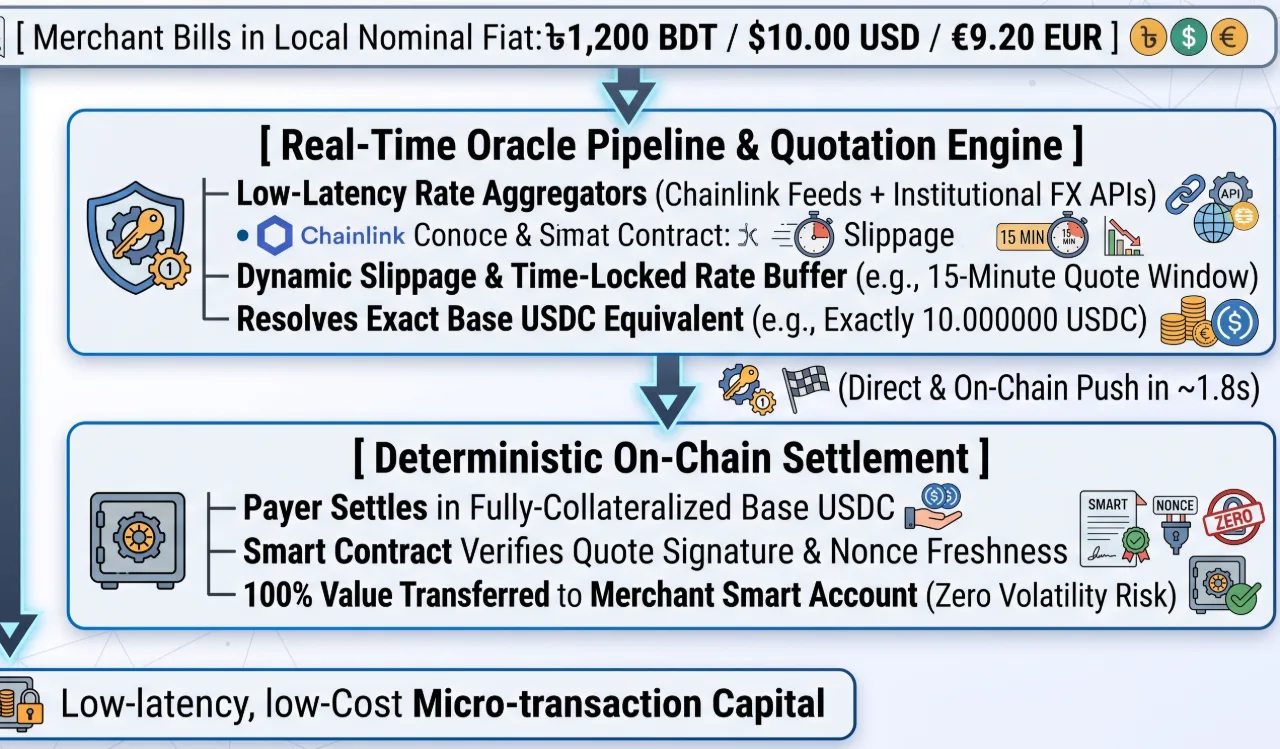
The zero-volatility nominal pricing engine operates across three core architectural components:
1. Multi-Currency Nominal Quotation (13+ Supported Currencies):
Merchants configure catalog prices in their domestic accounting unit (e.g., USD, EUR, GBP, BDT, INR, PKR, AED, CAD, JPY). When an order intent triggers—whether through a hosted web checkout or a headless machine API—the engine computes the exact dollar-pegged stablecoin equivalent using redundant, low-latency oracle feeds. Shoppers see familiar nominal prices without currency confusion.
2. Time-Locked Cryptographic Rate Quoting:
To prevent front-running and arbitrage during currency price movements, the payment engine issues a time-locked, cryptographically signed quote. The exchange rate remains guaranteed for an ephemeral window (e.g., 10–15 minutes). If the customer or autonomous agent confirms payment within that window, the exact quoted USDC amount is locked, eliminating unexpected price slippage.
3. 1:1 Pegged Base USDC Direct Finality:
Settlement occurs entirely in regulated, 1:1 asset-backed Base USDC. Because the payout settles directly into the merchant's smart account as a stable dollar-denominated asset, accounting teams record clean, predictable book entries. Merchants gain all the advantages of instant blockchain finality without ever holding speculative or fluctuating crypto assets.
By bridging local fiat denominations with dollar-pegged stablecoin settlement, modern payment rails eliminate currency volatility while maintaining global borderless execution.